


GoSearch vs. Onyx GoSearch vs. Onyx
GoSearch is the best Onyx alternative for teams that want real-time search, on-demand model choice, and agents that act across 100+ apps, without the infrastructure and engineering work self-hosting requires.





What GoSearch does that Onyx can't
GoSearch
100+ connectors, full read and write
Live, at-query retrieval, not scheduled sync
Switch models per task, no engineering
Agents act across apps out of the box
Workflows orchestrate multiple agents at once

Onyx
40-50+ connectors, mostly read-only
Indexed sync, not real-time queries
Model choice restricted to admins
Agents require engineering resources
No cross-app, multi-agent workflow builder
Real results from GoSearch customers
47%
efficiency gain
80%
adoption in 3 months
< 3
months to ROI
Onyx leaves the integration work to you.
GoSearch is an AI knowledge layer, ready to act.
Enterprise search
GoSearch
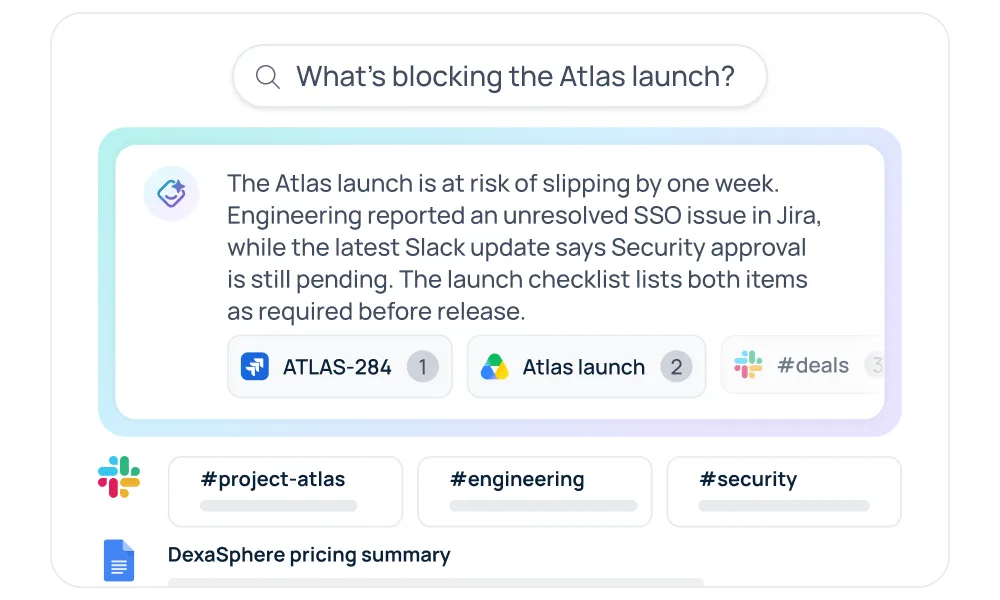
GoSearch connects to 100+ apps with full read and write access, querying them live through federated search, native indexing, and MCP. Results reflect the current state of each system.
Onyx connects to less than 50 apps through indexing connectors that sync on a schedule rather than query live. Connectors are read-only by default, with writing requiring custom engineering.
AI chat assistant
GoSearch
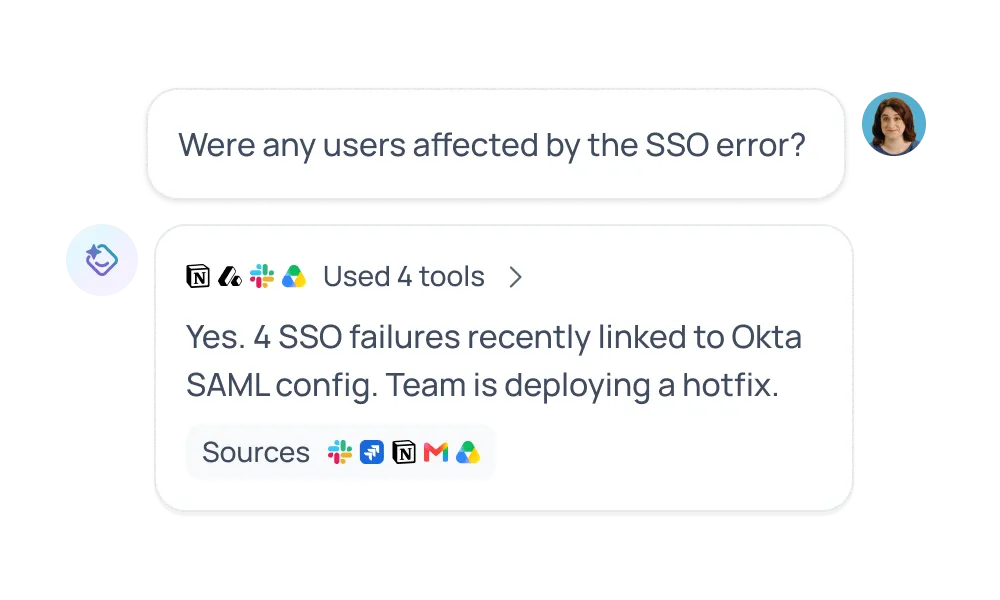
GoSearch lets any employee switch between OpenAI, Anthropic, Google, and xAI models on demand based on the task, with answers shaped by their role, permissions, and connected apps.
Onyx also works with multiple LLMs, but flexibility is configured by admins. Swapping models is an infrastructure change, not something an employee picks per question.
Agents
GoSearch
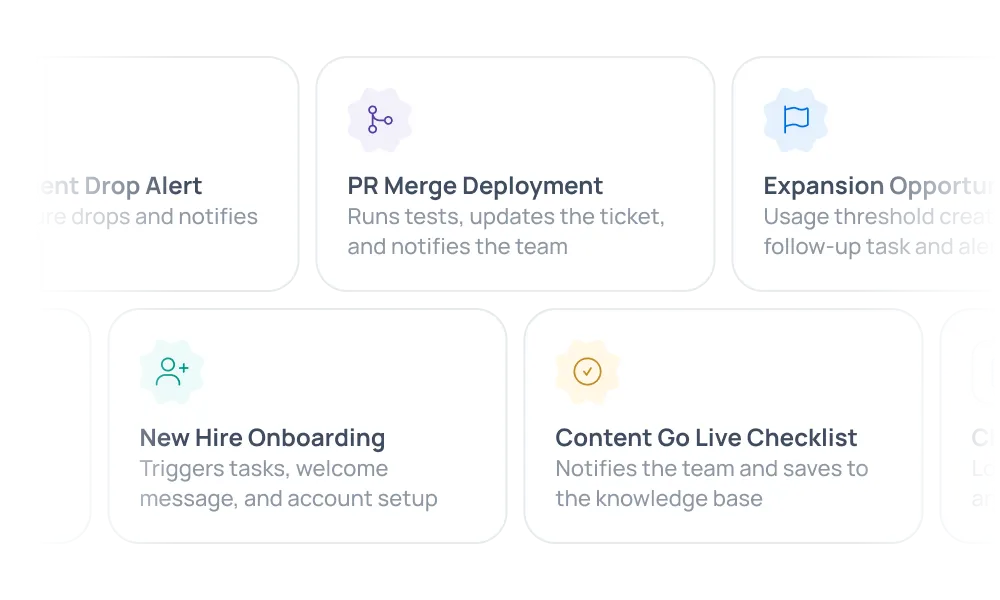
GoSearch agents are ready to use out of the box, built with no code, and act across the full connected stack of 100+ apps, both reading and writing data, from the start.
Onyx agents can only read connected data. Getting an agent to actually do something, not just answer a question, takes engineering setup first.
Workflows
GoSearch
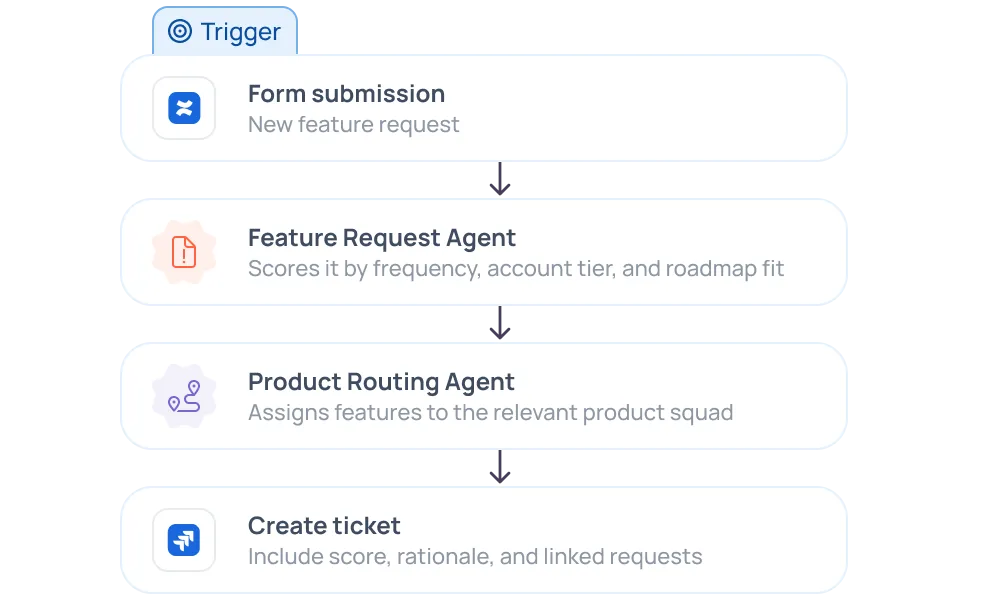
GoSearch workflows string together several specialized agents into one automated sequence, so a request can move through multiple steps and systems without a person handing it off along the way.
Onyx's closest equivalent is agentic deep research, where a single agent plans, searches, and writes up a report on its own. It's built for one agent working through one task, not a sequence of agents.
Enterprise search
GoSearch
GoSearch connects to 100+ apps with full read and write access, querying them live through federated search, native indexing, and MCP. Results reflect the current state of each system.
Onyx connects to less than 50 apps through indexing connectors that sync on a schedule rather than query live. Connectors are read-only by default, with writing requiring custom engineering.
AI chat assistant
GoSearch
GoSearch lets any employee switch between OpenAI, Anthropic, Google, and xAI models on demand based on the task, with answers shaped by their role, permissions, and connected apps.
Onyx also works with multiple LLMs, but flexibility is configured by admins. Swapping models is an infrastructure change, not something an employee picks per question.
Agents
GoSearch
GoSearch agents are ready to use out of the box, built with no code, and act across the full connected stack of 100+ apps, both reading and writing data, from the start.
Onyx agents can only read connected data. Getting an agent to actually do something, not just answer a question, takes engineering setup first.
Workflows
GoSearch
GoSearch workflows string together several specialized agents into one automated sequence, so a request can move through multiple steps and systems without a person handing it off along the way.
Onyx's closest equivalent is agentic deep research, where a single agent plans, searches, and writes up a report on its own. It's built for one agent working through one task, not a sequence of agents.
GoSearch vs. Onyx

Frequently asked questions
Open source means Onyx's code is publicly available to inspect, modify, and self-host, which appeals to teams that want full control over their AI stack. It also means the team adopting it takes on the work of hosting, maintaining, and updating the platform themselves, along with keeping connectors current. GoSearch is fully managed, so teams get broader connector depth and agent capability without owning that infrastructure.
Yes, especially for teams that want enterprise search, AI chat, and agents without managing infrastructure or engineering integrations themselves. GoSearch connects to 100+ apps with real-time, read-and-write access out of the box, while Onyx requires self-hosting and additional setup to reach the same level of capability.
Some technical ability helps. Onyx agents can answer questions using read-only data right away, but getting one to take action, like updating a record or filing a ticket, requires configuring an OpenAPI spec or MCP connection for each system. GoSearch agents are built with no code and can read and write across connected apps from the start.
GoSearch is a managed platform, so search, chat, and agents work out of the box once accounts are connected. Onyx requires deploying and hosting the platform yourself, and its connectors sync on a schedule rather than retrieving data live, which adds setup and ongoing maintenance most managed platforms like GoSearch don't require.
Not quite. Onyx's most advanced automation is agentic deep research, where one agent plans and writes a report on its own. GoSearch workflows chain multiple specialized agents together across different apps in a single run, so a process can move through several steps without manual handoffs.